General Chemistry: Acids, Bases & Solutions
Free MCAT study guide — Chemical and Physical Foundations of Biological Systems
Illustrated Guide& PDF
Full-color, printable companion to this guide — view online or download.
Gen Chem Visual Guide View Illustrated Guide
Acid-Base Chemistry
| Definition | Acid | Base |
|---|---|---|
| Arrhenius | Produces H⁺ in water | Produces OH⁻ in water |
| Brønsted-Lowry | Proton (H⁺) donor | Proton (H⁺) acceptor |
| Lewis | Electron pair acceptor | Electron pair donor |
pH = −log[H⁺] | pOH = −log[OH⁻] | pH + pOH = 14
Ka × Kb = Kw = 1.0 × 10⁻¹⁴ | pKa + pKb = 14
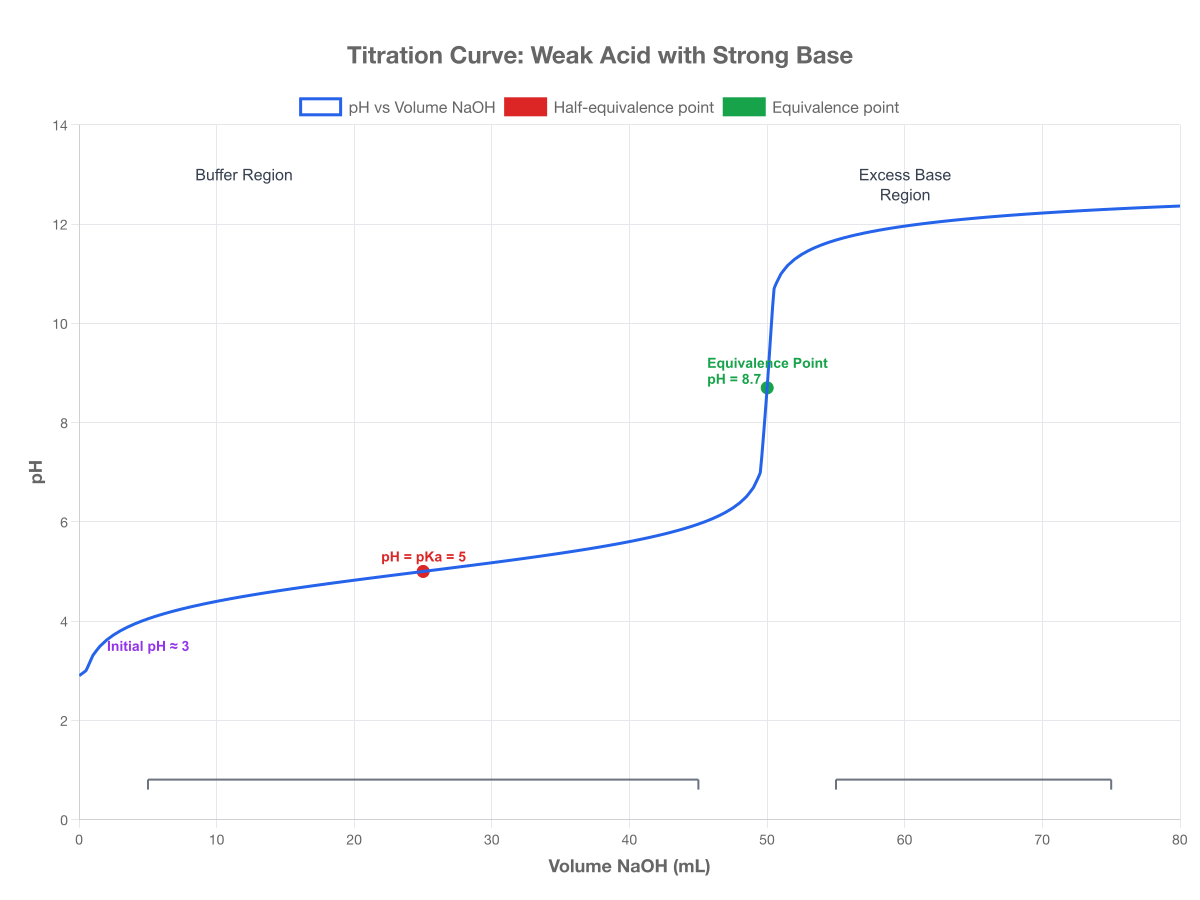
Buffers
Henderson-Hasselbalch: pH = pKa + log([A⁻]/[HA])
Key Point: Buffers work best within ±1 pH unit of pKa. Maximum capacity when [HA] = [A⁻].
Solutions
Colligative Properties
Depend on number of solute particles, not identity:
| Property | Equation | Effect of solute |
|---|---|---|
| Boiling point elevation | ΔTb = iKbm | BP increases |
| Freezing point depression | ΔTf = iKfm | FP decreases |
| Osmotic pressure | Π = iMRT | Creates osmotic pressure |
| Vapor pressure lowering | P = χ_solvent × P° | VP decreases (Raoult's law) |
Key Point: van't Hoff factor (i): NaCl → i ≈ 2, CaCl₂ → i ≈ 3, glucose → i = 1
Electrochemistry
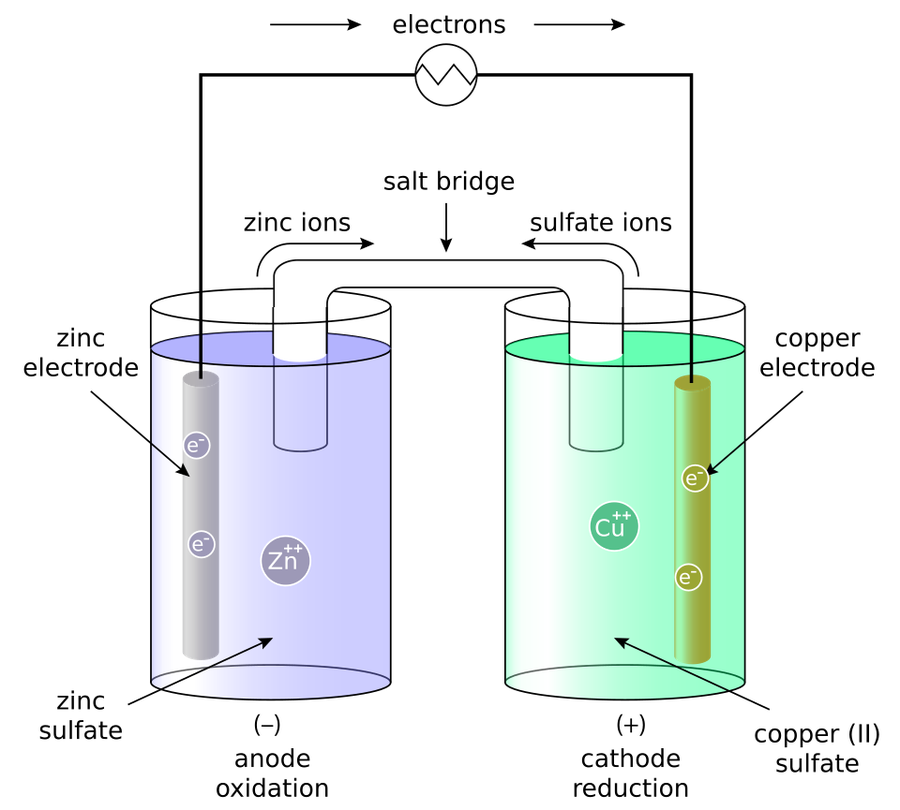
E°cell = E°cathode − E°anode | ΔG° = −nFE°
Key Point: AN OX, RED CAT. Anode = oxidation (−), Cathode = reduction (+) in galvanic cells.
Related Chemical and Physical Foundations of Biological Systems Study Guides
Acid-Base Chemistry and Buffer SystemsAtomic Structure and Periodic TrendsChemical Bonding and Molecular GeometryElectricity and Magnetism: Coulomb's Law to CircuitsElectrochemistry: Galvanic and Electrolytic CellsFluids and Circulation: Bernoulli, Poiseuille, and Blood Flow
Browse all free MCAT study guides or read MCAT strategy on the DoctorMCAT blog.
Practice What You've Learned
Test your understanding with our question bank and practice tests.
Start Practicing Free